
In this age when deceit is everywhere, the quest for the truth becomes very difficult indeed. It becomes necessary to obtain all information in order to take the right decision, be it when employing an individual or when it comes to matters of the heart. The obtaining of the truth is often associated with background verification.
When moving ahead, it helps to have a systematic approach. In this guide from Evidence Eye Detectives, you will learn all about the 7 step background verification process.
What is the Background Verification Process?
Background Verification is the method by which the correctness and genuineness of the personal and professional details of the candidate concerned are ascertained before recruiting the candidate.
It may be stated in simple words that background verification consists in verifying the key details of the candidate including identity, address, education, experience, and criminal record.
Why Background Verification is Important?
Background checking is necessary as it will make possible for organizations to make better decisions regarding safer and more reliable recruitments. Here are some of the reasons why background checking is necessary:
- Avoids Fake Recruitment: It will make sure that the individual recruited is authentic and that he does not have any false credentials.
- Improves Employee Safety: This procedure prevents recruiting people with a history of crime that may pose a threat to their employees.
- Ensures Reputation Protection: Organizations get trusted recruits who can improve their reputation through their performance.
- Improved Recruitment Decisions: Better decisions can be made through information collected from background checking.
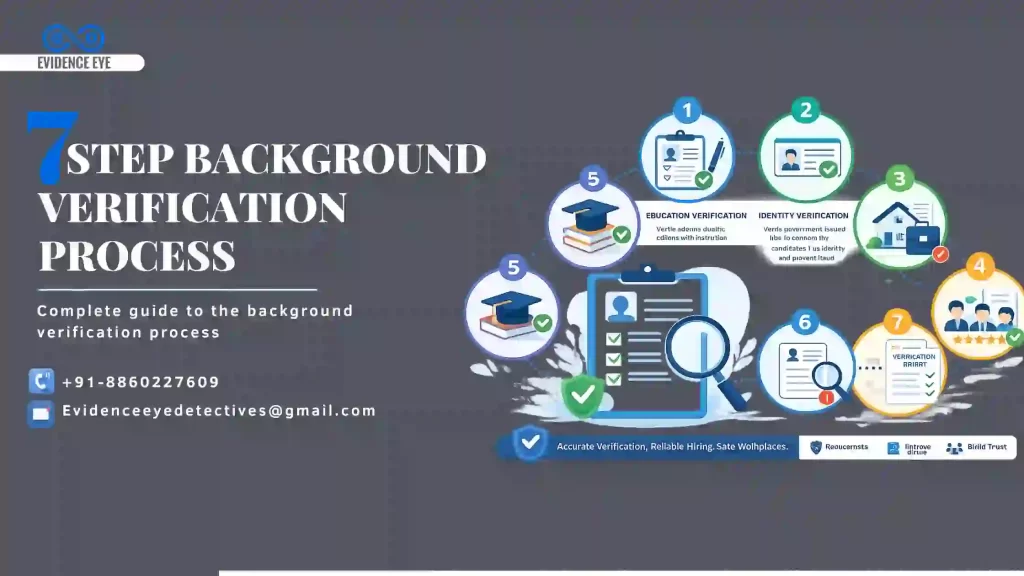
The 7-Step Background Verification Process
Background verification is a step-by-step procedure adopted by companies to verify a candidate’s information and make safe, accurate, and reliable hiring decisions.
1. Consent of Candidate & Information Collection
The first step involves taking consent from the candidate in writing and collecting important documents like ID proofs, address proof, and employment records.
2. Identification of the Candidate
Official documents including Aadhar, PAN, passport, and more are examined to validate the real identity of the candidate.
3. Address Validation
Both present and previous addresses provided by the candidate are confirmed using either physical or electronic means.
4. Employment Verification
The candidate’s past employment history is verified for accuracy by checking their previous positions and tenure with each respective employer.
5. Education Validation
The educational background and the credentials of the candidates are validated for verification purposes to confirm their authenticity.
6. Background Investigation
Any previous criminal activity can be checked through legal documentation to ensure that the candidate poses no threat to the organization.
7. References & Conclusion
The references provided by the candidate are contacted to verify the candidate’s conduct and performance.
Looking for reliable background verification services?
Partner with experts who deliver fast, accurate, and confidential results to help you hire with confidence.
Benefits Of A Structured Background Verification Process
Implementing a well-defined process offers several advantages:
- Better Hiring Decisions
- Reduced Risk of Fraud
- Improved Workplace Safety
- Enhanced Brand Reputation
- Legal Compliance
Common Challenges in Background Verification
Even with a structured system, challenges can arise:
- Incomplete candidate information
- Delayed responses from previous employers
- Fake documents
- Legal restrictions in data access
Expert Tips for Effective Background Verification
Worried about making the process of background checks more successful? You should consider the following expert guidelines:
- Create a Standardized Process: Have a consistent checklist for every candidate.
- Apply Technology: Automate using technology.
- Do the Verification Before Offering a Job: Avoid doing it post-onboarding.
- Rely on Experts: Professional agencies provide accurate results faster.
- Protect Confidentiality: Nothing is more important than maintaining the confidentiality of candidates.
Conclusion
The 7-step background verification process acts as your insurance against any erroneous recruitment. This 7-step procedure is vital in an environment where the speed of recruiting is everything. If companies want to be successful in the future, they need to implement this strategy.
👉 Looking for reliable background verification services?
Partner with experts who deliver fast, accurate, and confidential results to help you hire with confidence.