In the current era of digitization and risks, decision-making has become imperative in scenarios such as recruiting employees, forming alliances, and even deciding upon marriages. Here comes the significance of professional background checking techniques. Professional background checking involves various structured and legal verification processes that help validate a person’s identity and reliability.
As revealed by various industry statistics, a huge number of employers encounter inconsistencies in CVs, which makes professional background verification inevitable.
In this blog you will get to know about the top professional background verification methods that can be considered efficient and modern, along with proper LSI keywords and expert opinions.
What is Background Verification?
Background verification means verifying the identity information of an individual through legitimate sources of information. The purpose is to make sure that the details given are true before coming up with a conclusion. Professional methods of background checking utilize technological advancements and field investigation in order to provide precise results.
Why Professional Background Verification Methods Matter
The use of structured professional background verification techniques assists in:
- Avoiding hiring fraud and resume falsification
- Providing for workplace safety and compliance
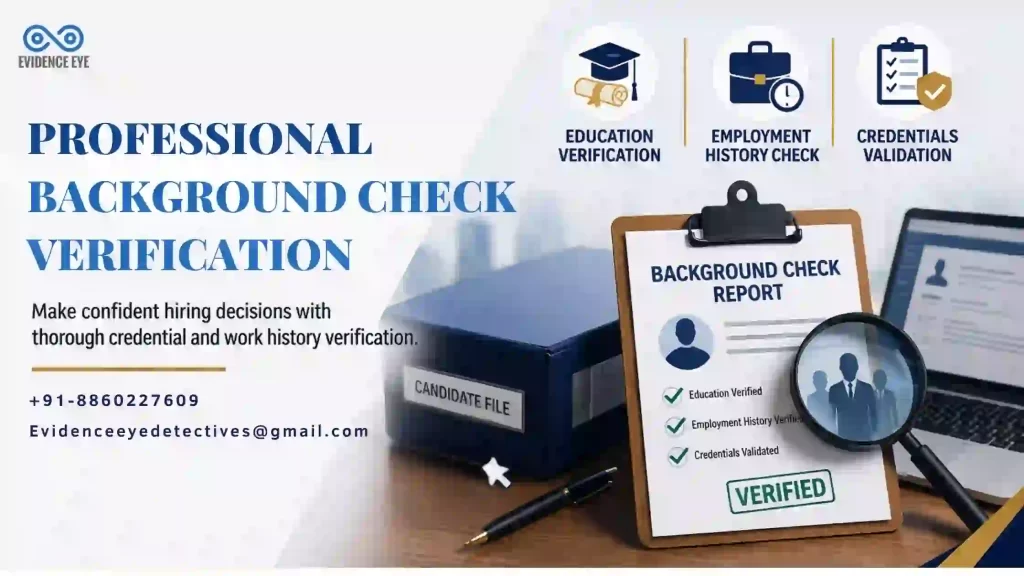
- Validating identity, educational qualifications, and employment history
- Mitigating legal and financial risks
- Enhancing decision-making in recruitment and interpersonal interactions
Types of Professional Background Verification Methods
Below are the most widely used and effective professional background verification methods, each explained in one short paragraph for clarity.
1. Identity Verification
Identity verification helps authenticate the identity of an individual via identification from authorized government sources, such as Aadhaar, PAN card, passport, or voter IDs, making sure that the identity of the person is authentic and not fictitious.
2. Address Verification
Address verification involves the physical verification of the current address as well as the permanent address of the individual by examining their utility bills or via Geo-Tagging, allowing further investigations in case the provided address seems fake.
3. Employment Verification
Employment verification helps verify the employment history of the individual via calling previous employers or verifying the job position and tenure of employment.
4. Educational Verification
Educational verification validates academic certificates, such as degrees and diplomas, by verifying their legitimacy through the institution itself or its database, which aids in uncovering any fake certificates and ensures that the candidate holds an authentic educational qualification.
5. Criminal Record Check
A criminal record check is a process whereby police databases are scrutinized to find any history of criminal behavior associated with the individual, making it one of the most important processes of professional background verification.
6. Credit and Financial Background Check
The credit and financial background check helps ascertain a candidate’s credit score and financial management by accessing information from credit agencies.
7. Checking References
Checking references entails talking to one’s past employers, peers, and other people who can give credible information on the candidate’s behavior and work ethics, among other things.
8. Online/ Social Media Background Check
This kind of background check looks at social media presence and activity for insights about an individual’s personality and behavior.
9. Background Checking for Marriage
Process of verifying background for marriage involves checking a person’s family history, financial status, habits, and past relationships to be sure of what to expect from an individual before getting into marriage.
10. Business Background Verification
This process involves assessing whether the organization being considered is registered, financially sound, and reputable in the marketplace.
Advanced Professional Background Verification Methods [Modern Approach]
With evolving technology, professional background verification methods now include:
- AI-Based Background Screening: AI tools analyze large datasets quickly to detect inconsistencies, fraud patterns, and hidden risks.
- Digital KYC & API Verification: Automated systems verify identity and documents instantly using government and financial APIs.
- Field Investigation (On-Ground Checks): Physical verification by agents ensures real-world accuracy, especially for address and lifestyle checks.
- Continuous Monitoring: Some organizations now use ongoing background monitoring instead of one-time verification.
Background Verification Process (Step-by-Step)
Understanding the process helps improve trust and transparency:
- Consent Collection – Legal permission is required before checks
- Document Submission – ID, certificates, and records are collected
- Verification Execution – Cross-checking with databases and sources
- Field Investigation – Physical validation when needed
- Final Report Generation – Detailed findings with risk flags
Consent is mandatory in India under data protection laws before conducting verification.
Challenges in Background Verification
Even with advanced professional background verification methods, challenges include:
- Fake documents and forged credentials
- Lack of centralized databases in India
- Delays in institutional verification
- Privacy and legal restrictions
- Incomplete or inconsistent records
India’s fragmented record systems often make verification more complex and time-consuming.
Best Practices for Effective Background Verification
To ensure accurate results:
- Always obtain written consent
- Use role-based verification depth
- Combine digital and physical checks
- Partner with professional agencies
- Maintain strict confidentiality
- Follow legal and data privacy guidelines
Why Choose Evidence Eye Detectives?
When it comes to reliable professional background verification methods, Evidence Eye Detectives offers:
- Experienced and skilled investigators
- 100% confidential investigations
- Legal and ethical verification processes
- Customized verification solutions
- Accurate and timely reports
Whether it’s employee verification, matrimonial checks, or corporate investigations, professional expertise ensures better accuracy and trust.
Conclusion
In today’s world, with all kinds of falsehoods and scams going around, the professional verification of backgrounds serves as an effective technique to get at the real story behind the scene. This includes everything from identity verification to employment verification, as well as using cutting-edge technology like AI verification techniques. Professional verification isn’t just a good idea; it’s essential.