Hiring the wrong person can cost a business far more than money. It can damage workplace safety, erode team trust, and expose a company to legal liability. This is why background checks for employment have become a standard, and often legally necessary, part of the hiring process across nearly every industry.
Whether you’re an HR manager building a screening policy, a small business owner hiring your first employee, or a job seeker curious about what shows up in your file, understanding how background checks for employment work will help you navigate the process with confidence.
In this guide, we’ll break down what employment background checks cover, why they matter, how the process works, the legal boundaries employers must respect, and how a professional investigative agency like Evidence Eye Detectives can make the entire process faster, more accurate, and fully compliant.
What Are Background Checks for Employment?
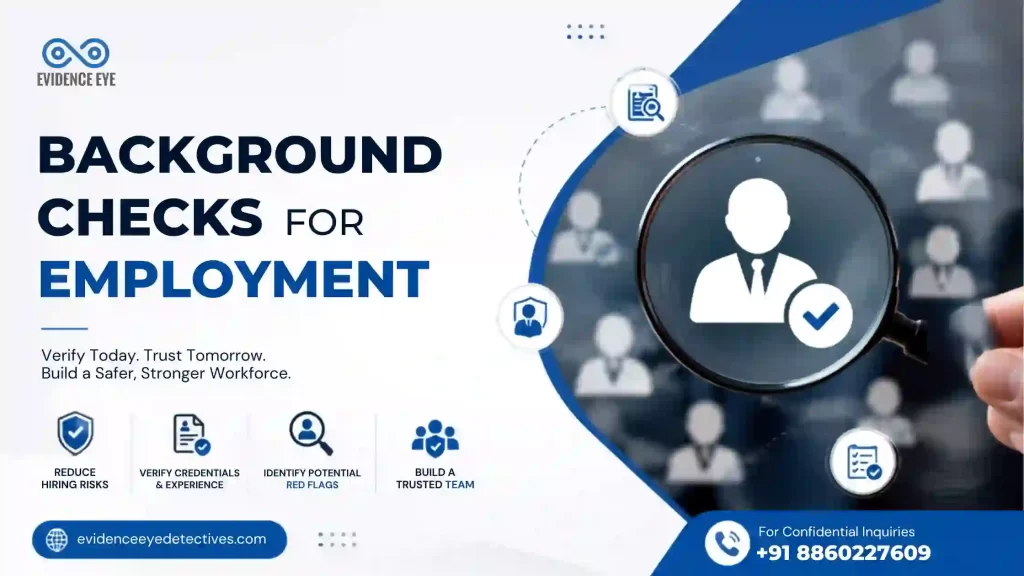
Background checks for employment are investigative reports that verify a candidate’s identity, history, and qualifications before they are hired. Employers use these checks to confirm that the information a candidate has provided—work history, education, criminal record, and more—is accurate and truthful.
At their core, employment background checks exist to answer one simple question: Is this person who they say they are, and are they safe and qualified to bring into our organization?
Why Employers Conduct Background Checks for Employment?
Employers don’t run background checks for employment just to be cautious—they do it because the risks of skipping this step are real and measurable. Some of the top reasons include:
- Workplace safety: Identifying candidates with a history of violence, theft, or dangerous behavior protects existing employees and customers.
- Reducing liability: Negligent hiring lawsuits can arise if an employer fails to screen an employee who later causes harm.
- Protecting company assets: Financial roles often require credit checks to assess trustworthiness with sensitive data or funds.
- Verifying qualifications: Education and employment verification confirm that a candidate actually has the credentials and experience listed on their resume.
- Maintaining company reputation: One bad hire in a client-facing role can damage a brand’s reputation for years.
- Regulatory compliance: Certain industries, such as healthcare, finance, and childcare, are legally required to run background checks for employment before hiring.
These reasons explain importance of background verification in modern hiring practices, from small startups to Fortune 500 companies.
Types Of Background Checks for Employment
Not all background checks for employment are the same. Employers typically select from a range of screening tools depending on the role, industry, and level of risk involved.
1. Criminal Record Checks
A criminal background check searches county, state, and federal databases for any criminal history, including felonies, misdemeanors, and pending charges. This is one of the most common components of pre-employment background checks, especially for roles involving vulnerable populations, security, or financial responsibility.
2. Employment History Verification
This confirms previous job titles, dates of employment, and responsibilities. Employment verification helps employers catch resume inflation or outright fabrication, ensuring the candidate’s experience matches what they’ve claimed.
3. Education Verification
Education verification confirms degrees, certifications, and institutions attended. It’s a critical step for roles requiring specific academic qualifications, such as engineering, healthcare, or law.
4. Credit History Checks
For roles involving financial responsibility—such as accounting, banking, or executive positions—employers may run a credit check to evaluate financial responsibility and identify red flags like bankruptcies or excessive debt.
5. Reference Checks
Speaking directly with former supervisors or colleagues provides qualitative insight that a report alone can’t capture, such as work ethic, reliability, and interpersonal skills.
6. Drug Testing
Many industries, particularly transportation, healthcare, and manufacturing, require pre-employment drug screening to ensure workplace safety and regulatory compliance.
7. Social Media and Online Screening
An increasing number of employers review public social media activity to assess professionalism, red flags, or inconsistencies with a candidate’s application.
Combining several of these background verification methods gives employers a well-rounded, accurate picture—far more reliable than relying on a resume and interview alone.
Legal Considerations for Background Checks for Employment
Running background checks for employment isn’t as simple as searching a name online. Employers must comply with several important laws to avoid discrimination claims and legal penalties.
The Fair Credit Reporting Act (FCRA)
The FCRA governs how employers can use consumer reports, including background checks for employment, during hiring. Key requirements include:
- Obtaining written consent from the candidate before conducting a check.
- Providing a disclosure that a background check will be performed.
- Following adverse action procedures if a decision not to hire is based on the report, including giving the candidate a copy of the report and a chance to dispute inaccuracies.
EEOC Guidelines
The Equal Employment Opportunity Commission (EEOC) prohibits employers from using background checks for employment in a way that disproportionately and unfairly disqualifies candidates based on race, national origin, or other protected characteristics. Criminal history, in particular, must be evaluated in context—considering the nature of the offense, how long ago it occurred, and its relevance to the job.
State and Local “Ban the Box” Laws
Many states and cities have passed “ban the box” legislation, which restricts when employers can ask about criminal history during the hiring process—often delaying the question until after a conditional job offer is made.
Because these regulations vary widely by state and industry, many businesses choose to work with a licensed investigative agency that understands current compliance requirements rather than risk running afoul of the law.
Step by Step Of Background Check Process
Understanding how the process unfolds can help both employers and candidates know what to expect.
- Job offer or application review: The employer identifies a candidate they intend to hire pending screening.
- Disclosure and consent: The candidate receives a written disclosure and signs a consent form authorizing the background check.
- Information gathering: The investigator or screening company collects data from criminal databases, employment records, educational institutions, and other sources.
- Verification and analysis: Findings are cross-checked for accuracy, and any discrepancies are flagged.
- Report delivery: A comprehensive report is delivered to the employer, typically within a few business days.
- Adverse action (if applicable): If the employer decides not to proceed based on the findings, they must follow FCRA-required notification steps.
- Final hiring decision: The employer makes an informed decision based on verified, accurate information.
At Evidence Eye Detectives, this process is handled with strict attention to legal compliance, discretion, and turnaround speed, ensuring employers get reliable results without unnecessary delays.
Benefits Of Background Checks For Employment
The value of employment background checks extends well beyond simply avoiding bad hires. Businesses that consistently screen candidates report:
- Lower turnover rates: Since candidates are better matched to roles they’re genuinely qualified for.
- Reduced workplace incidents: Thanks to early identification of risk factors.
- Stronger client trust: Particularly for businesses in security, caregiving, or financial services.
- Legal protection: by demonstrating due diligence in the hiring process.
- Improved team morale: since employees feel safer working alongside properly vetted colleagues.
For companies in high-trust industries, a strong background investigation policy isn’t optional—it’s a competitive advantage and a foundation of organizational integrity.
Common Mistakes Employers Make
Even well-intentioned employers can run into trouble if background checks for employment aren’t handled correctly. Common pitfalls include:
- Skipping written consent, which can lead to FCRA violations.
- Using outdated or unverified databases, resulting in inaccurate reports.
- Applying blanket disqualification policies for any criminal record, regardless of relevance—raising discrimination concerns.
- Failing to follow adverse action procedures, exposing the company to lawsuits.
- Inconsistent screening practices across different candidates, which can appear discriminatory even if unintentional.
Partnering with an experienced background check company helps employers avoid these missteps while maintaining a fair, consistent, and legally sound hiring process.
Tips for Job Seekers Facing a Background Check
If you’re a candidate preparing for a pre-employment background check, a little preparation goes a long way:
- Review your own record in advance to catch and address any inaccuracies.
- Be upfront about any past issues during interviews rather than letting them surface unexpectedly.
- Ensure your resume is accurate, since inflated titles or dates are among the most common causes of failed employment verification.
- Know your rights under the FCRA, including the right to dispute inaccurate information.
Transparency and preparation typically work in a candidate’s favor far more than attempting to hide past issues.
Why Choose a Professional Investigative Agency?
While some employers attempt to run background checks for employment using free online tools, these searches are often incomplete, outdated, or legally risky. Professional investigative agencies bring:
- Access to comprehensive, accurate databases not available through basic online searches.
- Legal compliance expertise, ensuring every check meets FCRA and state requirements.
- Faster turnaround times, minimizing hiring delays.
- Customized screening packages tailored to specific industries and roles.
- Discretion and professionalism, protecting both the employer’s and candidate’s privacy.
At Evidence Eye Detectives, our team specializes in delivering accurate, compliant, and thorough background checks for employment across a wide range of industries. Whether you need a single criminal record check or a full pre-employment screening package, we help businesses make confident, informed hiring decisions.
Conclusion
Background checks for employment are no longer just a formality—they’re a critical safeguard for building a safe, trustworthy, and legally compliant workplace. From verifying employment history to conducting criminal record checks, each component plays a role in helping employers make informed decisions while protecting candidates’ rights throughout the process.
If your organization is looking to strengthen its hiring process with accurate, compliant, and timely background checks for employment, contact Evidence Eye Detectives today. Our experienced investigators are ready to help you hire with confidence.